Every minute a trailer sits at the dock is lost capacity, added labor cost, and pressure on downstream operations. A well-chosen truck unloading conveyor turns that bottleneck into a steady, controllable flow of cartons, parcels, and totes. By reducing manual handling, improving ergonomics, and synchronizing with sortation or storage, these systems help operations in express delivery, e-commerce fulfillment, cross-border logistics, and industrial receiving unlock consistent throughput—without expanding dock doors or headcount. Whether unloading small vans or 53-foot trailers, the right conveyor bridges the gap between vehicle and facility so product moves safely, quickly, and predictably.
What a Truck Unloading Conveyor Does—and Why It Matters
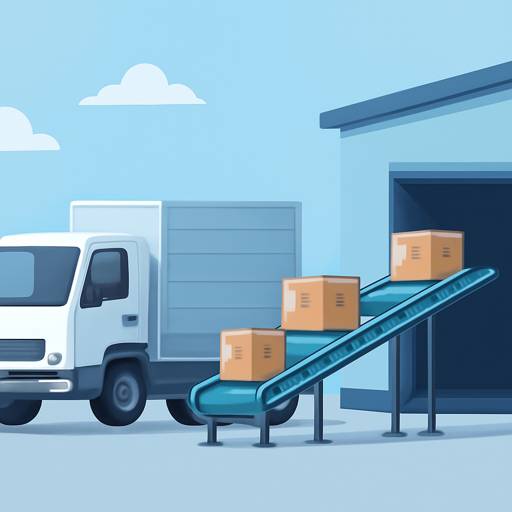
A truck unloading conveyor is a mobile or fixed conveyor mechanism that extends into the vehicle to transfer goods from floor level to the dock and onward into a facility. Designs vary—from telescopic belt units with powered booms and variable speed control, to flexible gravity or powered roller conveyors that snake into tight spaces. Regardless of style, the mission is the same: cut travel distance and manual lifting while creating a stable, ergonomic flow of freight.
Common configurations include telescopic belt conveyors with articulating heads that raise or lower to match different trailer heights; flexible powered roller lines that curve around obstacles; and gravity skate-wheel sections for low-cost, low-maintenance applications. Key components typically include a robust frame with casters, a drive package with soft-start motors, photo-eye sensors for accumulation control, emergency stop circuits, and intuitive operator stations. Premium options add anti-collision systems on extendable booms, auto-deck leveling, LED task lighting, and status indicators for clearer communication at busy docks.
The business case is compelling. A truck unloading conveyor shrinks unload time per trailer by consolidating “touches,” stabilizing the work pace, and minimizing double-handling. That means fewer people required per dock while lifting restrictions and repetitive motions are reduced, supporting better safety outcomes and lower lost-time injuries. Product damage drops because cartons are conveyed instead of tossed or stacked haphazardly. Throughput becomes predictable—an essential input when you want transport schedules, labor planning, and inventory putaway to run on-time. For parcel hubs or cross-border facilities handling variable package sizes, the ability to tune speed and deliver consistent singulation into a sortation line is especially valuable. In short, a truck unloading conveyor is not just equipment—it is an operational control lever that lifts performance across the building.
How to Choose the Right Conveyor for Your Facility
Selecting a truck unloading conveyor begins with a field audit. Start with trailer mix (vans, box trucks, 40-foot containers, 53-foot dry vans), daily volume, weight range, and package geometry. High volumes of mixed parcels benefit from powered belt or roller systems with accumulation zones and variable speed drives; pallet-heavy inbound might favor robust roller decks or hybrid setups that stage palletized freight while a powered boom clears loose cartons. Ceiling height, dock approach angle, floor conditions, and aisle widths determine whether you can deploy a fixed dock-mounted telescopic conveyor or need mobile, flexible units that park out of the way between waves.
Integration is next. If freight feeds put-to-wall, AS/RS, or a sorter, look for controls that handshake with your WMS or PLC—photo-eyes, barcode triggers, and load presence sensors can meter flow and prevent choking downstream. Variable frequency drives enable gentle acceleration that protects fragile goods, while intelligent accumulation keeps operators from chasing gaps. On the ergonomics side, prioritize articulating heads, hydraulic elevation, and intuitive HMI displays. In regions with temperature swings or dust (common in cross-docking sites across Asia-Pacific and coastal warehouses), sealed bearings, IP-rated controls, and belt compounds suitable for humidity pay for themselves through reliability.
Run the math on ROI. Calculate touches removed per package, seconds saved per trailer, and corresponding labor reallocation. Add avoided claims from reduced damage and safety improvements. Total cost of ownership should cover energy use, preventive maintenance, and critical spares. Many operations implement phased rollouts: start with one dock to validate assumptions, then standardize on a configuration that becomes your facility template. When comparing vendors, assess track records in express delivery, e-commerce, and industrial receiving—and request references that mirror your lane profile and service level expectations. To explore proven options aligned with high-volume logistics, review product lines under truck unloading conveyor to see how extendable, flexible, and automated models fit different dock strategies.
Deployment, Safety, and Maintenance Best Practices
A smooth deployment starts with a dock survey that captures measurements from bumper to bulkhead, trailer sill heights, obstructions, and power availability. Plan equipment positioning to avoid pinch points at the dock edge, establish line-of-sight between operators, and keep egress routes clear. If you expect to redeploy units between doors, map turning radii, floor slopes, and storage locations. Commissioning should include controls integration tests, speed and acceleration tuning, and a dry run simulating peak volume.
Safety is built on design and disciplined use. Specify clearly marked emergency stops, bump strips, and anti-collision on extendable booms. Use guarding and toe boards at transitions from vehicle to dock. Train unload teams on start-up checks, lockout/tagout, and correct posture when transferring cartons from floor to belt. Provide lighting inside trailers via boom-mounted LEDs to improve visibility. Standardize SOPs: set maximum belt speeds per product class, define who can alter control parameters, and enforce housekeeping so stray straps, shrink wrap, or broken pallets don’t migrate onto the conveyor. In fast-paced parcel operations, near-miss reporting and weekly toolbox talks keep awareness high while reinforcing the correct response to jams.
Preventive maintenance turns uptime into a habit. Schedule routine inspections for belt tracking and tension, roller and bearing health, gearbox temperatures, and chain or belt drive wear. Clean photo-eyes and reflective targets to maintain reliable accumulation control. In dusty or high-humidity environments common to coastal cross-border hubs, periodic enclosure checks and desiccant replacement protect electronics. Stock a critical spares kit—belts, rollers, sensors, VFDs—and document mean time to repair so you can refine inventory levels. Many facilities now layer in condition-based monitoring; vibration and thermal readings predict component fatigue, while hours-run counters trigger proactive service before peak season. Tie these insights into your CMMS so work orders and parts availability align with your shipping calendar.
Finally, benchmark performance with clear KPIs. Track unload time per trailer, cartons per labor hour, jam frequency, damage rate, and ergonomic indicators like average lift frequency above shoulder height. As improvements push trailers through faster, coordinate with receiving and putaway teams to avoid downstream congestion. Over time, data from your truck unloading conveyor will highlight optimization opportunities: rebalancing labor between docks, adjusting speed profiles by carrier lane, or adding accumulation to pre-stage outbound returns. The result is a resilient dock that scales with seasonal spikes and supports reliable, on-time operations across express, warehousing, and industrial supply chains.

Beirut native turned Reykjavík resident, Elias trained as a pastry chef before getting an MBA. Expect him to hop from crypto-market wrap-ups to recipes for rose-cardamom croissants without missing a beat. His motto: “If knowledge isn’t delicious, add more butter.”